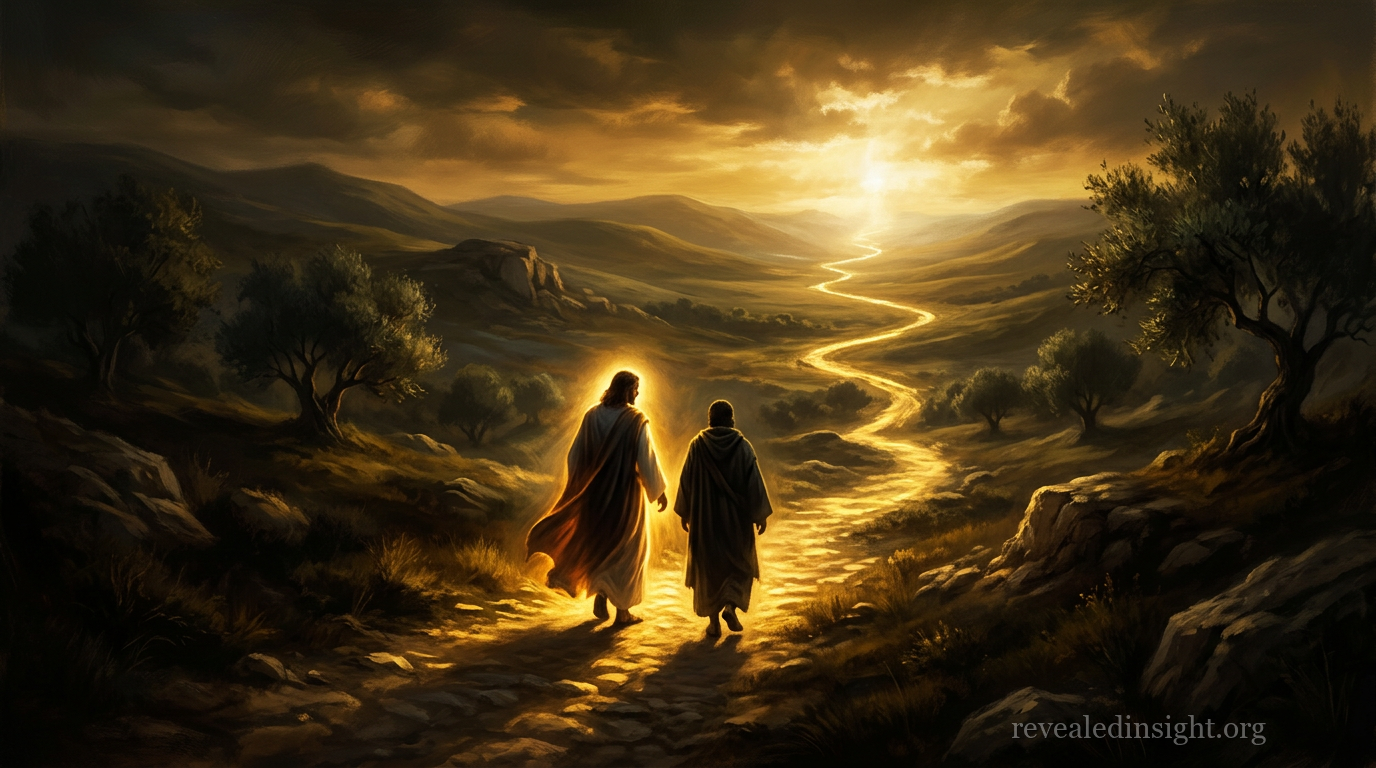
The Disciple: Understanding True Discipleship and Spiritual Maturity

The Disciple: Understanding True Discipleship and Spiritual Maturity

Teaching by Prophet Lovy L. Elias · Watch on YouTube · 30 May 2024

The Disciple Revealed: Understanding True Discipleship and Spiritual Maturity

True discipleship is not a limitation — it is the path through which divine grace is transferred, legacies are carried, and believers are prepared for their full calling in God.

Discipleship is one of the most misunderstood realities in the modern Church. Many believers equate independence from mentors with spiritual greatness, when Scripture and history reveal the opposite. From Moses to Samuel to Elisha, the greatest figures in the Kingdom were formed through accountability, correction, and the willingness to receive from imperfect vessels. Understanding the difference between a follower and a disciple is not a matter of preference — it is a matter of spiritual destiny.


The Disciple: Understanding True Discipleship and Spiritual MaturityWatch on YouTube ↗

Teaching Overview

  1. Those who are discipled by God and those who are discipled by men both require human vessels — rejecting mentorship is a spiritual disadvantage, not a mark of greatness.
  2. The soul grows through discipleship, correction, and maturity of the senses — not through spiritual experience alone.
  3. Followers and disciples are distinct: followers walk away when a mentor fails; disciples follow the divine nature within the mentor, not the flesh.
  4. Samuel's relationship with the rejected Eli demonstrates that divine grace remains in a vessel even after God has moved on — and rejecting that vessel can cost a believer their calling.
  5. True disciples seek to learn how to serve, not to acquire power, and they understand that correction is the engine of spiritual growth.

Key Distinctions

FollowersDisciples
What they areThose who associate with a leader based on preference or availabilityThose marked by God to receive, be corrected, and carry a mentor's grace
Response to failureWalk away when the mentor makes a mistakeRemain, separating the divine nature from the human weakness
What they followThe flesh of the leaderThe Spirit operating within the leader
MotivationSeeking power, association, or positionSeeking to learn how to serve and glorify God
Relationship to correctionAvoid or resent itUnderstand that without correction, there is no growth
Spiritual outcomeStagnation; destiny missedGrowth, maturity, and effective ministry
Divine LineageDivine Revelation
What it isProphetic or priestly authority traceable through bloodline or institutional descentAuthority that comes directly from God, not traceable to any human source
Biblical exampleJohn the Baptist — lineage tracked through his Levitical fatherJesus — His identity and authority could only be known by revelation
How it is recognizedBy flesh and blood — human knowledge of ancestry and traditionBy the Spirit — only those to whom God reveals it can know it
Elijah parallelSons of the prophets — descended from prophets, carried their titleElijah the Tishbite — prophetic lineage untraceable; called directly by God
LimitationDependent on traceable succession; subject to human validationNot subject to human validation; cannot be denied by those who truly encounter it
Discipled by GodDiscipled by Men
What it meansGod Himself equipped the person — often through hiddenness, divine encounters, and sovereign placement around key peopleA human mentor directly trained, corrected, and poured into the person
Does it exclude human input?No — God still places the person around others to activate certain things in themNo — divine calling can coexist with human mentorship
Biblical examplesElijah the Tishbite, Jesus (before public ministry)Moses under Jethro, Samuel under Eli, Elisha under Elijah
Common misunderstandingThat being discipled by God makes human mentorship unnecessary or shamefulThat being discipled by a man makes one spiritually lesser
God's designBoth paths serve God's purpose — neither is superior by defaultThe issue is not which path, but whether the believer is willing to be discipled at all
Mistaken OnceLiving in Mistakes
What it isA righteous person falling due to weakness — a singular or correctable failureA pattern of unrepentant, uncorrected error that defines the person's conduct
Biblical basis"A righteous man falls seven times" (Proverbs 24:16)Implied by the contrast — falling is not the same as dwelling in sin
Effect on callingDoes not disqualify the mentor or the discipleMay indicate deeper issues requiring discernment
Disciple's responseRemain, receive the divine content, reject the errorExercise discernment without abandoning the grace within the vessel
Danger of confusionTreating a mentor's single failure as disqualifying causes disciples to abandon their callingExcusing ongoing sin in the name of loyalty removes the accountability that discipleship requires

Seeing God — and Making Others See Him

  • Transformation comes when a believer lends God their ear, allowing Him to pour into the soul and produce a genuine change of spirit.
  • A true encounter with God cannot be hidden — it illuminates itself in how a person speaks, prays, and carries presence.
  • If the God who has appeared to a believer cannot be experienced by others through that believer, the encounter has not reached its full depth.

"The moment you see God, it is impossible to unsee Him."

Content image

Authority, Lineage, and Divine Revelation

  • John the Baptist's authority was unquestioned because his prophetic lineage was traceable through his Levitical father — human institutions could verify it.
  • Jesus' authority was contested precisely because no human lineage could account for it — it required divine revelation to be known.
  • Elijah the Tishbite shares the same characteristic as Jesus: no traceable prophetic lineage, no institutional backing, authority received directly from God.

"You could only know Him by divine revelation. You could not know it by flesh and blood."

The Greatness of Moses and the Value of Being Mentored

  • Moses is the greatest prophet in Scripture — so far beyond the prophetic office that God declared him to be "God to Aaron," and Aaron was to be his prophet.
  • Moses was a foreshadow of the Lord Jesus Christ, and yet Moses was discipled — he had a spiritual father and a mentor.
  • Having a mentor did not diminish Moses' greatness; it was part of how God structured him for maximum impact.

"Moses was discipled. Moses had a spiritual father. Moses had a mentor. But that did not mean Moses was less."

The Soul's Growth and Spiritual Maturity

  • The spirit does not grow — it is the soul that grows, and the body only ages; spiritual maturity is a function of the soul, not accumulated years.
  • Maturity is the ability to exercise what the senses discern — a mature believer operates from trained senses, not from unrestrained emotion.
  • A believer who cannot moderate themselves according to their environment — who insists "this is how I am" — is displaying the mark of an immature soul, not an authentic one.

"Maturity is your ability to exercise what your senses discern."

Content image

The Selection of Disciples and the Danger of Unprayed Choices

  • Jesus spent an entire night in prayer before selecting His twelve apostles — divine assignment, not human availability or skill, was the basis of selection.
  • Leaders who select their inner circle outside of prayer fill that circle with time bombs — people whose loyalty is conditional and who will expose the leader at the first sign of failure.
  • Even Judas was selected strategically — his betrayal was within the purpose of God, necessary to fulfil the sacrifice; a traitor chosen through prayer serves God's plan, while one chosen carelessly destroys it.

"Even the one that will betray you must be within your purpose so that there be trial that makes you succeed."

Eli, Samuel, and the Grace in a Rejected Vessel

  • God rejected Eli and cut off his bloodline — yet God never instructed Samuel to leave Eli, because Eli still carried divine grace that Samuel needed for his next level.
  • When God called Samuel, the voice of God sounded like the voice of Eli — the very access code Samuel needed to respond to God came through the rejected mentor.
  • Eli's instruction — "Say, 'Lord, your servant is listening, He speaks'" — was the key that opened Samuel's prophetic ministry; a disciple who had abandoned Eli would have missed it entirely.

"Despite God rejecting Eli, Eli still carried divine grace within him that Samuel needed for his next level."

Content image

The Attitude and Marks of a True Disciple

  • A disciple understands they still have much to learn and is at peace with that — the posture of learning is not weakness, it is the prerequisite for effectiveness.
  • A disciple seeks to learn how to serve, not to acquire power; those seeking power want to be glorified, while those seeking to serve want to glorify Him.
  • A disciple actively needs accountability and correction — knowing that their growth is directly proportional to the correction they are willing to receive.

"A disciple knows their growth depends on correction. So if there is no correction, then there is no growth."

The Failure of the Modern Church in Discipleship

  • There is no spiritual lineage in the Church anymore — believers read the Psalms of David and receive his wisdom while rejecting the chain of mentorship that produces such wisdom.
  • The greatest prophetic heritage can be present in a generation and go uncontinued simply because no one was willing to be discipled under it.
  • Mistakes are not disqualifiers from discipleship — Paul corrected Peter publicly, yet Peter remained the head of the apostles; the error did not terminate the calling.

"We have failed God because we have failed to be discipled."


Key Definitions

Disciple — One who is studying or learning under a mentor, receiving and partaking of the divine grace within that person — following them according to the Spirit, not according to the flesh.

Follower — One who associates with a leader based on preference, emotion, or availability, and who walks away when the mentor makes a mistake — never truly receiving the grace within them.

Divine Lineage — Prophetic or priestly authority that can be tracked through bloodline or institutional succession, recognisable by human knowledge of ancestry and tradition.

Divine Revelation — Authority or identity that can only be known by the Spirit of God — not traceable to any human source and not subject to human validation.

Soul — The part of the human being that grows through discipleship, correction, and maturity; distinct from the spirit (which does not grow) and the body (which only ages).

Maturity — The ability to exercise what the senses discern; marked by restraint, situational awareness, and the capacity to function according to where people are rather than demanding others adapt to oneself.


Key Takeaways

  • Being discipled is a sign of spiritual potential, not spiritual weakness — the greatest figures in Scripture, from Moses to Samuel to Elisha, were all formed under mentors, and the willingness to be discipled is itself a mark of where God is taking a believer.
  • The soul grows through correction, not just through spiritual experience — without accountability and discipleship, a believer's soul remains immature regardless of how many years they have been saved or how much spiritual activity they engage in.
  • Followers and disciples respond differently to a mentor's failure — a follower leaves when a mentor makes a mistake; a disciple separates the divine content from the human error and remains to receive what God placed in that vessel.
  • Rejecting a mentor — even a flawed or rejected one — can cost a believer their calling — Samuel's willingness to stay with the rejected Eli was the very thing that positioned him to hear the voice of God for the first time.
  • Every ministry is a continuation of someone else's unfinished assignment — the arrogance of believing one's calling is entirely new and self-originating cuts a believer off from the spiritual lineage they were designed to carry forward.

Reflection Questions

  1. Is there a mentor, spiritual father, or leader you have distanced yourself from because of their failures — and have you examined whether you were following their divine nature or their flesh?
  2. If the voice of God sounds like the voice of those who have poured into you, whose voice are you training yourself to hear — and are you still in proximity to that person?
  3. When you consider your spiritual growth over the last season, has it been marked by correction received and accountability embraced — or by independence and self-direction?
  4. Are you genuinely seeking to learn how to serve, or are you seeking to acquire spiritual power and position? What evidence in your life points toward your honest answer?
  5. What would it cost you — practically, socially, or in terms of pride — to submit to discipleship right now, and are you willing to pay that cost for the sake of your calling?

Prayers and Declarations

Opening Prayer

"God blesses you all in the name of Jesus, and His grace and loving kindness remain with you."

Prayer instruction from Eli to Samuel, as taught:

"When you hear the voice, go, lie down. If He calls you, say, 'Lord, your servant is listening, He speaks.'"


Scripture References

  • Matthew 16:17 — "And Jesus answered and said unto him, Blessed art thou, Simon Barjona: for flesh and blood hath not revealed it unto thee, but my Father which is in heaven." (KJV)
  • Deuteronomy 18:15 — "The LORD thy God will raise up unto thee a Prophet from the midst of thee, of thy brethren, like unto me; unto him ye shall hearken." (KJV)
  • Luke 2:52 — "And Jesus increased in wisdom and stature, and in favour with God and man." (KJV)
  • Hebrews 5:14 — "But strong meat belongeth to them that are of full age, even those who by reason of use have their senses exercised to discern both good and evil." (KJV)
  • Ecclesiastes 1:9 — "The thing that hath been, it is that which shall be; and that which is done is that which shall be done: and there is no new thing under the sun." (KJV)
  • Luke 6:12-16 — "And it came to pass in those days, that he went out into a mountain to pray, and continued all night in prayer to God. And when it was day, he called unto him his disciples: and of them he chose twelve, whom also he named apostles; Simon, (whom he also named Peter,) and Andrew his brother, James and John, Philip and Bartholomew, Matthew and Thomas, James the son of Alphaeus, and Simon called Zelotes, And Judas the brother of James, and Judas Iscariot, which also was the traitor." (KJV)
  • Proverbs 24:16 — "For a just man falleth seven times, and riseth up again: but the wicked shall fall into mischief." (KJV)
  • 1 Samuel 3:1-10

Golden Nuggets

"The moment you see God, it is impossible to unsee Him."

"The Lord never put anything in you to only work for you."

"Moses was discipled. Moses had a spiritual father. Moses had a mentor. But that did not mean Moses was less."

"Every ministry is a fulfillment and a continuation of another minister's work that they could not finish in their lifetime."

"If you want to know a Christian that is going somewhere, it's a Christian that can be discipled."

"If they are followers, then they will follow you according to the flesh. If they are disciples, then they will follow you according to the Spirit."

"Despite God rejecting Eli, Eli still carried divine grace within him that Samuel needed for his next level."

"You can reject their weaknesses, but still receive the God content from them."

"A disciple knows their growth depends on correction. So if there is no correction, then there is no growth."

"We have failed God because we have failed to be discipled."


Resources and Further Reading

Quote card — tap to view & save

Mobile & desktop wallpapers — tap to download

Topics

CallingFaithfulnessTransformationIdentityRelationships

Related Teachings

TransformationDry Oil: The Internal Transformation That Prepares You for the RaptureFaithThe Unknown: Moving From Belief Into the Depths of GodCallingTransitions: Recognizing and Responding to God's Divine Seasons of Change

Share this teaching

Share on XFacebookWhatsApp

Share the Word

If this message has blessed you, you can help make Scripture accessible to others around the world.

Faith Comes By Hearing

Sponsor audio Bibles for the unreached

Bringing the Word of God to oral cultures and low-literacy communities through recorded audio Scripture.

Give →
← Browse all Study Notes