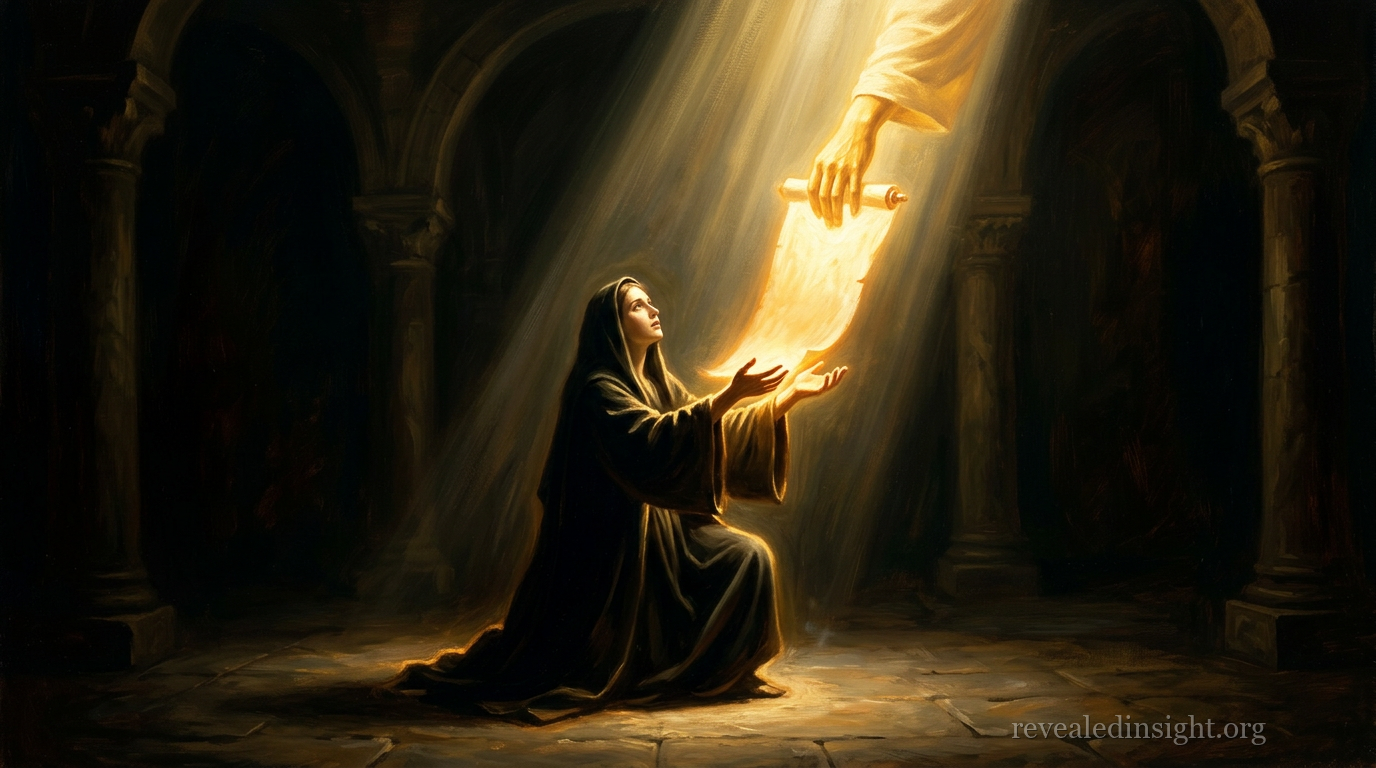
How to Read the Word of God: Moving from Scripture to Living Encounter
Scripture is not the destination — it is the compass that points you to the living God.
The confusion dividing the body of Christ does not begin with doctrine — it begins with approach. Believers who cannot distinguish between the written Scripture and the living Word of God will always come out of their reading with head knowledge instead of power, with traditions instead of transformation, and with the letter instead of the Spirit.
Teaching Overview
- Number two is understanding that the Scripture and the Word are different.
Inferred main teaching points from the core argument:
- Your approach to Scripture determines whether you encounter God or merely accumulate information.
- Scripture and the Word of God are not identical — Scripture is the written letter, while the Word is God Himself speaking.
- Scripture must be stored in the heart, not just the mind, for it to become spiritually alive and transformative.
- Scripture functions as a compass pointing to Jesus — it is a window into the spiritual world, not the destination itself.
- Reading Scripture through the letter produces religious bondage; reading it through the Spirit produces life, power, and encounter.
Key Distinctions
| Scripture | The Word of God | The Letter | The Spirit | Mind | Heart | Head Knowledge | Spiritual Encounter | Tradition of Men | Way of the Spirit | |
|---|---|---|---|---|---|---|---|---|---|---|
| What it is | The written, inspired record of God's dealings with humanity | God Himself speaking — the eternal Rhema | The surface-level, literal reading of the text | The divine life and meaning behind the text | The seat of memory and information storage | The seat of sentimental value, living reality, and encounter | Accumulated biblical information without spiritual revelation | A direct, personal meeting with the living God through His Word | Man-made religious rules and practices imposed on others | God's design for how His people are to live and move spiritually |
| Its nature | Physical, written, finite in form | Eternal — heaven and earth shall pass away but His Word shall not | Kills when approached as the final authority | Gives life when it is what you receive through the text | Holds the past — memories that can be forgotten | Holds what is alive and present — what the heart contains becomes present reality | Static — produces arguments and theological positions | Dynamic — produces power, transformation, and demonstration of the Holy Spirit | Selective — applied inconsistently to impose control | Consistent — positions the believer to walk in the Spirit |
| How it functions | Points and directs — a compass or road sign to the destination | Is the destination — the person of Jesus Christ | Produces religious bondage, division, and legalism | Produces freedom, power, and encounter with God | Treats Scripture as a chore to be completed | Treats Scripture as something of deep sentimental and spiritual weight | Produces people who can quote scripture with zero power | Produces demonstration of the Spirit and of power | Cherry-picks texts to enforce cultural preferences | Requires full submission to God's design, not selective compliance |
| Where it leads | To Jesus — "these are they which testify of Me" | Into the very presence and experience of God | Into death — spiritual stagnation, division, and bondage | Into life — a living, active relationship with God | To recitation and information that remains in the past | To a living, present reality that governs how you live and act | To the ability to argue theology without demonstrating the kingdom | To the kingdom of God, which is not in words but in demonstration of Spirit and power | To religiosity — controlling others through the appearance of holiness | To spiritual candidacy — positioning the believer for genuine spiritual work |
The Root of Confusion in the Body of Christ
- The reason believers and ministers contradict one another is not a lack of Scripture — it is a wrong approach to Scripture.
- Prophets and apostles across different generations never contradicted each other because they all moved in the Spirit of the Word, not merely the letter of the text.
- When Scripture is approached as a history book or an intellectual document rather than a spiritual book, the reader comes out with wrong results.
"Why is there all this confusion and nonsense? It's simply because men don't know how to read the Word of God. Men confuse scripture with the Word of God. They are similar, but they are not the same thing."
Your Approach Determines What You Receive
- Scripture is a spiritual book — it contains the words of God Himself, endorsed by God, and must be approached spiritually and prayerfully.
- Approaching Scripture without reverence and spiritual posture reduces it to intellectual material that cannot produce encounter.
- The sacred value the priests gave to the scrolls — even kissing them — reflects the correct posture: Scripture as life, not literature.
"Your approach determines if the Lord God is going to meet you. Are you just going to find head knowledge or do you want to hear from God? Because if you understand that this is a spiritual book, then you need to approach it spiritually."
The Letter Kills, but the Spirit Gives Life
- Those who read Scripture and remain in the letter will produce religious bondage, legalism, and division — even when quoting the same texts others use to build and edify.
- The Pharisees had the same Scripture as Jesus — yet they could not see what was written because they read it through the letter.
- Reading Scripture through the letter produces people who are driven to shut down edification rather than receive it.
"The Bible says the letter kills, but the Spirit gives life. So if you read the scripture and you end up in the letter you will die. But if you read the scriptures and you end up in the Spirit you will live."
Scripture Versus the Word of God
- Scripture is the written letter — physical, practical, and pointing toward God; the Word is God Himself speaking, eternal and living.
- Heaven and earth shall pass away, but God's Word shall not — because His Word is spirit and life, not merely ink on paper.
- The Lord Jesus said clearly: you search the Scriptures thinking that in them you have life, but they only point to Him.
"The Word is Rema — God speaking. Scripture is the written letter. One can have scriptures, but they will be empty. If you have the word it is powerful. Because the word is God. Scripture is not God. It's just the letter that talks about Him."
Scripture as Compass and Window
- Scripture functions as a compass — it directs you toward Jesus but is not the destination itself; just as a road sign points to a city without being the city.
- Reading the Bible from cover to cover is commendable, but it does not guarantee revelation — encounter is the goal, not coverage.
- Scripture is a window into the spiritual world; the question is not whether you can see through the window, but whether you can go through the door.
"Scripture is the compass to Jesus."
Storing Scripture in the Heart, Not the Mind
- Deuteronomy 6:6–8 commands that the Word be in the heart — not merely memorized in the mind — because what is in the heart is alive and present, while what is in the mind belongs to the past.
- Whatever is stored in the heart becomes present reality — this is why unforgiveness held in the heart keeps a person emotionally in a moment that is decades old.
- The goal of reading Scripture is not to accumulate verses but to allow God's Word to become part of who you are — so that even paraphrasing its intent flows from a heart that has received it.
"Anything that goes into your heart has sentimental value to you. Everything that goes into your mind is just something you want to remember, but it's not necessarily important to you."
Traditions of Men Versus the Way of the Spirit
- Religious traditions that cannot be traced to a spiritual reality — such as insisting on head coverings while ignoring circumcision — reveal that a person is living in the letter, not the Spirit.
- Legalists select the portions of Scripture that allow them to impose control on others while ignoring the portions that would require equal submission from themselves.
- God desires the circumcision of the heart — the spiritual reality — not external physical practices performed as a substitute for genuine spiritual transformation.
"Men love to keep traditions of men. But they don't want the way of the Spirit."
Engaging Scripture as a Spiritual Weapon
- Psalm 150, read in deep prayer aloud, carries the potential to bring the presence of God down in a way that will shock you — because it functions as a spiritual key, not merely a collection of praise words.
- Psalm 103:20–22 demonstrates that Scripture gives believers language to interact with and acknowledge the angelic ministers of God — shifting the entire spiritual atmosphere.
- Acknowledging the spiritual realities Scripture describes — including angels, the living saints, and the presence of God — transforms your reading from passive study into active spiritual engagement.
"There is no more powerful book on this planet than the word of God. There's nothing like that. But you are not taught these things."
Key Definitions
Scripture — The written, inspired record of God's dealings with humanity; a physical letter that points toward God but is not God Himself.
The Word of God (Rhema) — God Himself speaking — eternal, living, and powerful; the Word is God, and unlike Scripture in its written form, it can never pass away.
The Letter — The surface-level, literal reading of a scriptural text, approached without spiritual understanding; the Apostle Paul identifies it as that which kills.
The Spirit — The divine life, intention, and power behind the written text; what the believer must receive through Scripture in order to live and move in God.
Necromancy — The summoning of and interacting with the dead; a high-level occult practice forbidden by God in Scripture, distinct from the reality that those who are in God are not dead but alive.
Traditions of Men — Man-made religious rules and practices that are selectively imposed on others in the name of spirituality, but which do not position anyone for genuine spiritual encounter or transformation.
Key Takeaways
- Scripture and the Word of God are not identical — confusing the written letter with the living, eternal Word is the root cause of contradiction, division, and powerlessness in the body of Christ.
- Your approach to Scripture determines what you receive — a spiritual approach produces encounter with God; an intellectual or religious approach produces head knowledge with no power.
- Scripture is a compass, not the destination — it points to Jesus and directs the believer into encounter, but seeking life in the text alone, rather than in the One it points to, leads to spiritual stagnation.
- What is stored in the heart is alive; what is stored only in the mind is the past — God commanded His Word to be written on hearts, not memorized in minds, because heart-level storage produces living, present transformation.
- The letter kills; the Spirit gives life — believers who read Scripture without the Spirit will inevitably produce legalism, traditions of men, and religious bondage rather than the demonstration of the kingdom.
Reflection Questions
- When you open your Bible, what is your actual posture — are you approaching it as a spiritual book seeking an encounter with God, or as a text to be studied, completed, or quoted?
- Is the Word of God stored in your heart — meaning it shapes your present reality, your emotions, and your decisions — or is it primarily stored in your memory as information you can recall?
- Where in your life have you been living by the letter rather than the Spirit — holding to religious practices or interpretations that impose rather than transform?
- Have you ever had a genuine encounter with God through Scripture — where the presence of God became real to you as you read? If not, what would it look like to approach the Word differently this week?
- Which tradition of men have you accepted as spiritual truth without examining whether it actually positions you for genuine encounter with God — and what would it cost you to let it go?
Prayers and Declarations
[Congregational instruction — Prophet led the congregation in prayer:]
"Father, give me a new heart. Amen."
Scripture References
- Ephesians 4:11 — "And he gave some, apostles; and some, prophets; and some, evangelists; and some, pastors and teachers;" (KJV)
- Proverbs 3:5 — "Trust in the LORD with all thine heart; and lean not unto thine own understanding." (KJV)
- Matthew 22:31-33 — "But as touching the resurrection of the dead, have ye not read that which was spoken unto you by God, saying, I am the God of Abraham, and the God of Isaac, and the God of Jacob? God is not the God of the dead, but of the living. And when the multitude heard this, they were astonished at his doctrine." (KJV)
- 2 Corinthians 3:6 — "Who also hath made us able ministers of the new testament; not of the letter, but of the spirit: for the letter killeth, but the spirit giveth life." (KJV)
- Genesis 15:6 — "And he believed in the LORD; and he counted it to him for righteousness." (KJV)
- 1 Corinthians 2:3-4 — "And I was with you in weakness, and in fear, and in much trembling. And my speech and my preaching was not with enticing words of man's wisdom, but in demonstration of the Spirit and of power." (KJV)
- Psalm 150
- Psalm 103:20-22 — "Bless the LORD, ye his angels, that excel in strength, that do his commandments, hearkening unto the voice of his word. Bless ye the LORD, all ye his hosts; ye ministers of his, that do his pleasure. Bless the LORD, all his works in all places of his dominion: bless the LORD, O my soul." (KJV)
- Luke 1:28-35
- Deuteronomy (referenced generally — necromancy prohibition)
- Mark 12:24-25
- John 5:39 — "Search the scriptures; for in them ye think ye have eternal life: and they are they which testify of me." (KJV)
- Jeremiah 29:13 — "And ye shall seek me, and find me, when ye shall search for me with all your heart." (KJV)
- Galatians 5:16 — "This I say then, Walk in the Spirit, and ye shall not fulfil the lust of the flesh." (KJV)
- Colossians 2:11
- Leviticus 19:27-28
- Revelation 5:5
- Numbers 6:1-8
- Hebrews 13:8 — "Jesus Christ the same yesterday, and to day, and for ever." (KJV)
- Deuteronomy 6:6-8 — "And these words, which I command thee this day, shall be in thine heart: And thou shalt teach them diligently unto thy children, and shalt talk of them when thou sittest in thine house, and when thou walkest by the way, and when thou liest down, and when thou risest up. And thou shalt bind them for a sign upon thine hand, and they shall be as frontlets between thine eyes." (KJV)
Golden Nuggets
"Men confuse scripture with the Word of God. They are similar, but they are not the same thing."
"Your approach determines if the Lord God is going to meet you."
"The letter kills, but the Spirit gives life. So if you read the scripture and you end up in the letter you will die. But if you read the scriptures and you end up in the Spirit you will live."
"The Word is Rema — God speaking. Scripture is the written letter. One can have scriptures, but they will be empty. If you have the word it is powerful. Because the word is God. Scripture is not God. It's just the letter that talks about Him."
"Scripture is the compass to Jesus."
"If you approach it like a regular book, it becomes regular. If you approach it spiritually, it becomes dangerous in your hands."
"Anything that goes into your heart has sentimental value to you. Everything that goes into your mind is just something you want to remember, but it's not necessarily important to you."
"Men love to keep traditions of men. But they don't want the way of the Spirit."
"The kingdom of God is not in words, but in the demonstration of the Spirit and power."
"The word of God is dangerous. It is dangerous. It will shock you."
Resources and Further Reading
Quote card — tap to view & save
Mobile & desktop wallpapers — tap to download
Related Teachings
Share this teaching
Share the Word
If this message has blessed you, you can help make Scripture accessible to others around the world.
